Product update
FlowBuddy Connects AI Teammates for Continuous Process Improvement
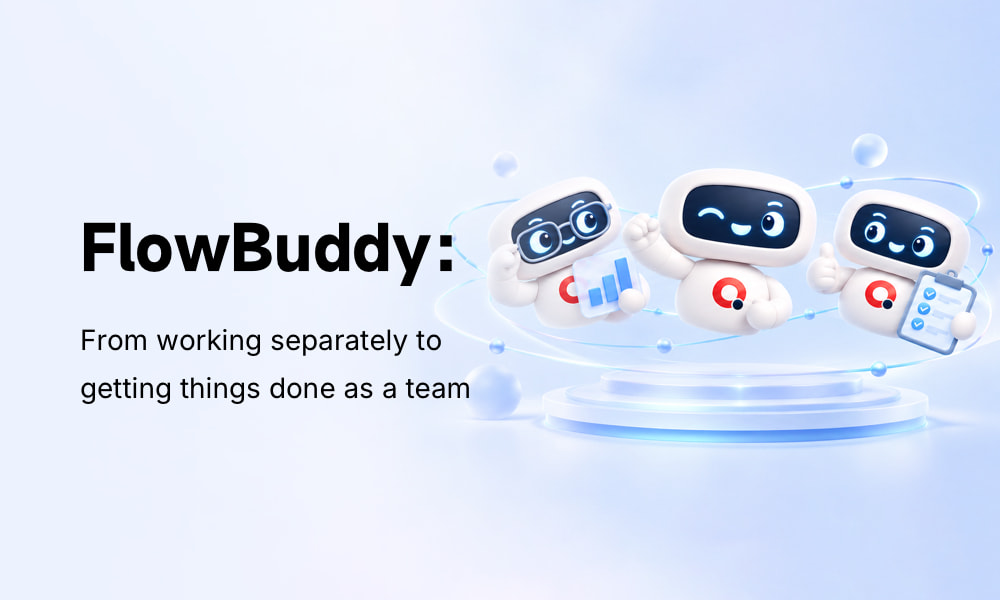
FlowBuddy connects specialized AI teammates to analyze evidence, compare improvement options, test paths, and review results with human confirmation.
Start with evidence, not assumptions
When equipment procurement takes longer than expected, the cause is rarely a single phrase such as “not enough people.” Applications may be returned for missing specifications or acceptance criteria, technical reviews may queue, and handoffs between activities may create waiting time that no one owns. FlowBuddy's analysis teammate therefore starts by comparing cycle times, returns, and activity performance across periods, then traces specific requests to see where time is actually lost.
The result is a documented starting point: which requests were delayed, which activities contributed to the delay, and which exceptions occurred often enough to matter. That evidence gives the improvement conversation a shared foundation.
Compare options in the process model
Finding a bottleneck does not determine the answer. Adding a materials pre-check, adding technical reviewers, or combining both changes workload, resource needs, and coordination costs in different ways. FlowBuddy's optimization teammate can test those alternatives in the process model and compare expected cycle time, queueing, and return rates.
This helps business teams weigh benefits against the operational cost of each option instead of choosing an improvement only because it sounds reasonable.
Validate whether the path can run
A reasonable improvement still has to survive exception paths. Who supplies a missing document? Where does the request return after it is complete? What happens when it is never supplied? Can a request continue after a failed technical review? FlowBuddy's validation teammate walks through those branches before a change is applied and exposes broken paths, missing decisions, and unreasonable loops.
Validation results return to the optimization teammate, so the design can be adjusted before people depend on it.
Review results with consistent measures
After a process change goes live, the analysis teammate compares before-and-after cycle time, returns, and activity performance with the same statistical definitions. It also considers changes in volume, procurement complexity, and staffing before interpreting the result.
If performance improves, the team can identify which measures helped. If it does not, analysis returns to the activities concerned. The loop becomes discover, optimize, validate, review, and improve again.
Further reading
Original announcement