01
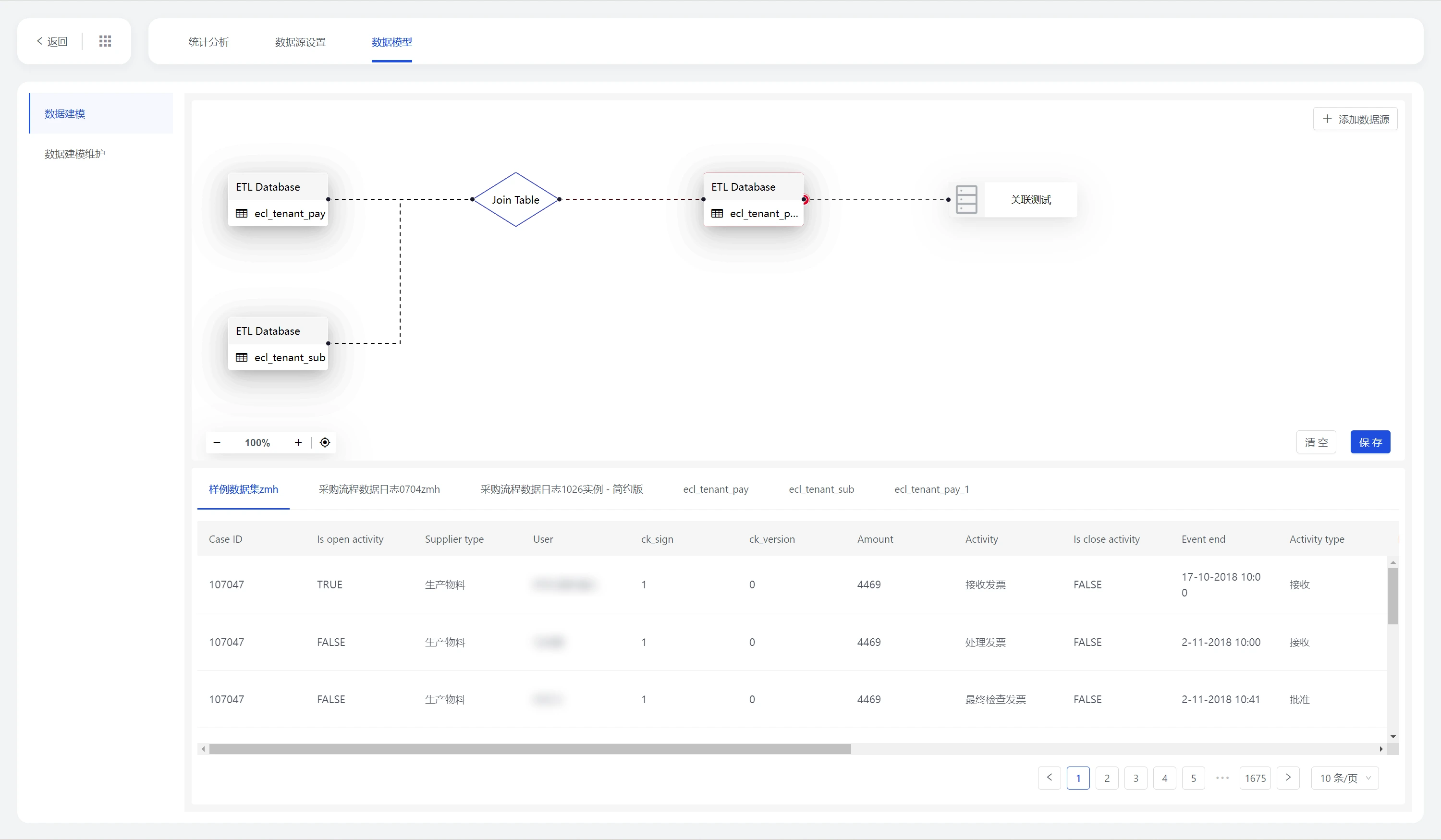
Prepare reliable event data
Connect event and business data from databases, files, logs and
REST APIs, with full, incremental or scheduled updates. Start with
a case ID, activity and timestamp. Clean, map and join records,
then add business attributes such as organization, product or
amount.
02
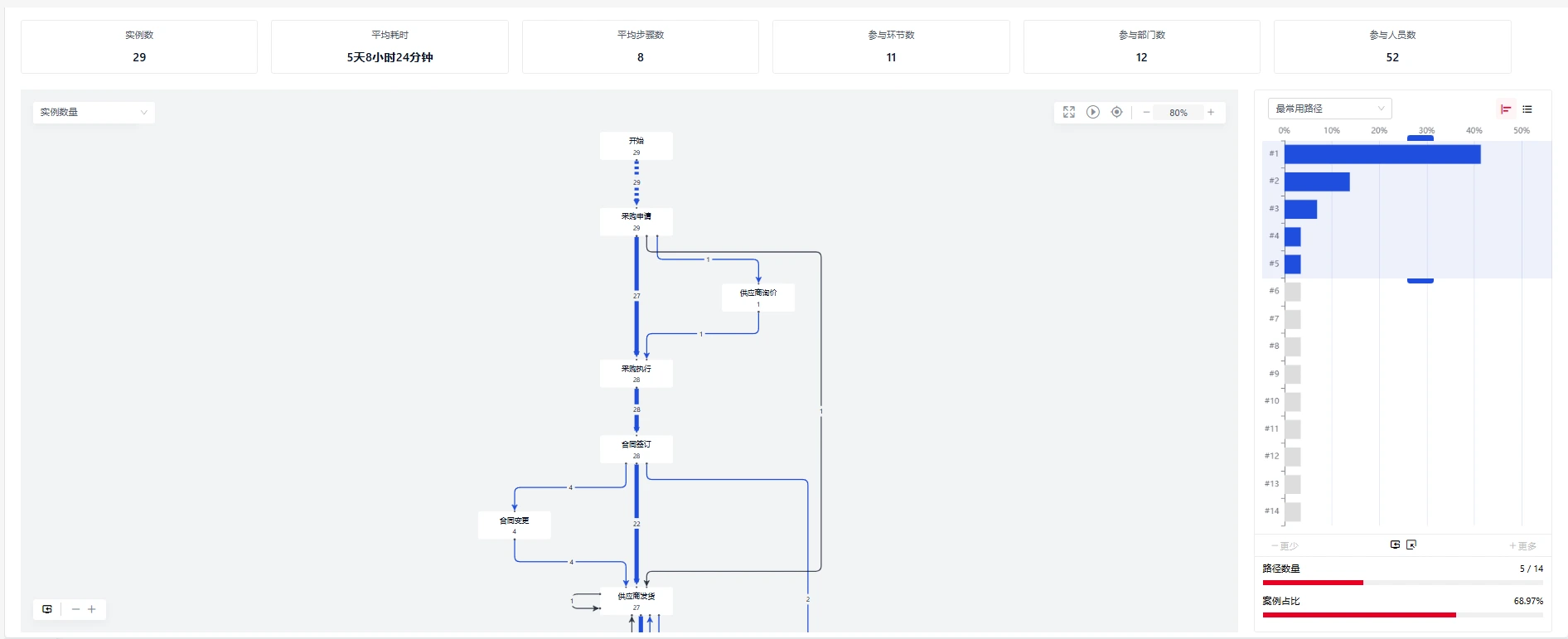
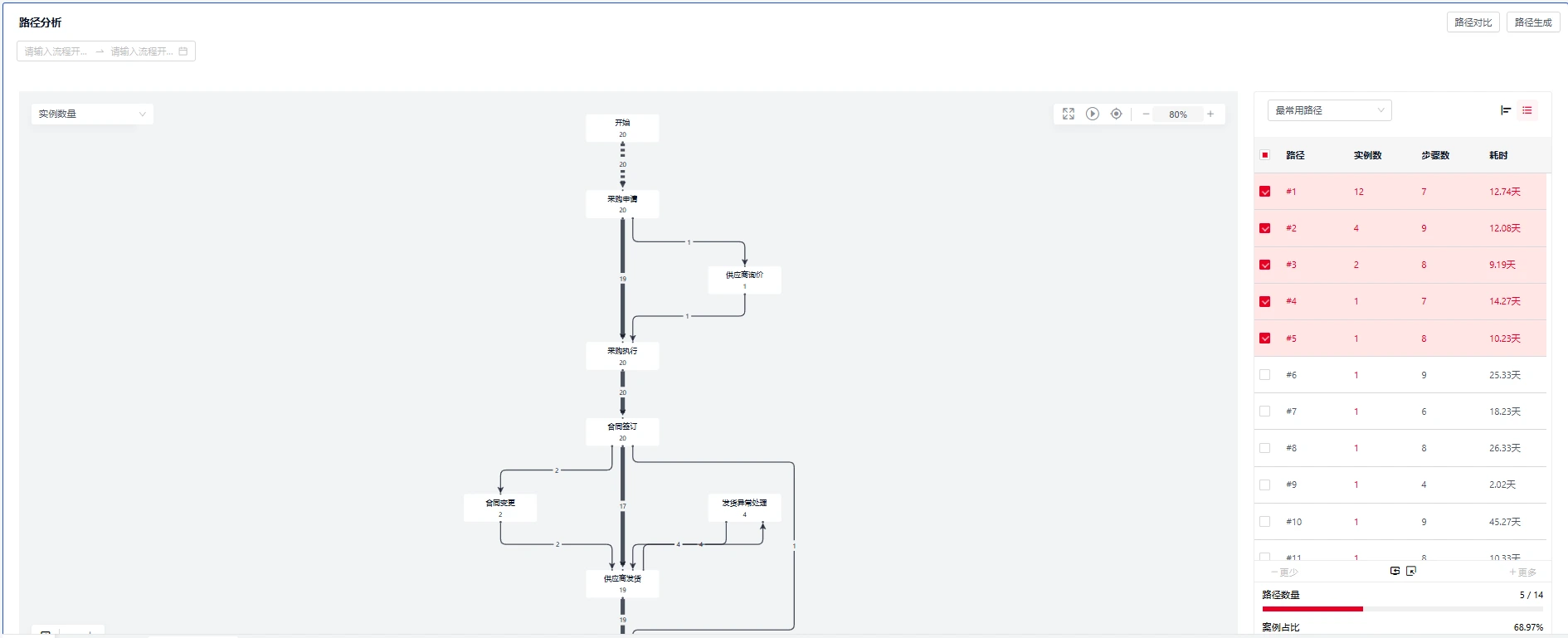
Discover actual paths and variants
Automatically reconstruct the observed process from event data.
Compare paths by volume, elapsed time and business attributes to
distinguish common routes from inefficient or unusual variants.
Connect events across systems to see the complete business
journey.
03
Locate bottlenecks and performance gaps
Analyze waiting time, handling time, rework and overdue steps.
Compare nodes, organizational units, roles and business types,
then trace an issue to the cases affected. Use these comparisons
to identify the conditions associated with poor performance.
04
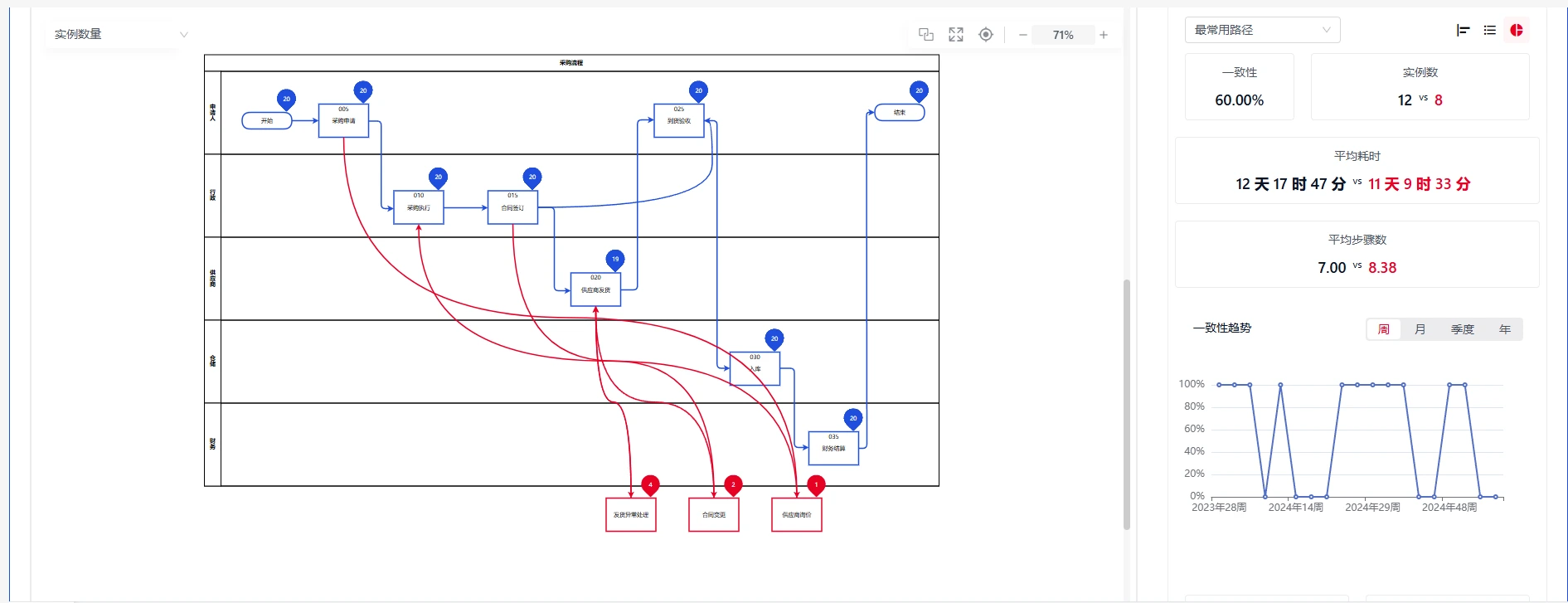
Check conformance and trace policy evidence
Compare observed execution with an EBPA or BPMN reference model to
identify missing, additional or out-of-order steps. Complement
path analysis with rule checks on individual cases. Candidate
rules extracted from policy documents require authorized human
confirmation before publication, with conclusions linked to source
evidence.
05
Connect indicators to business results
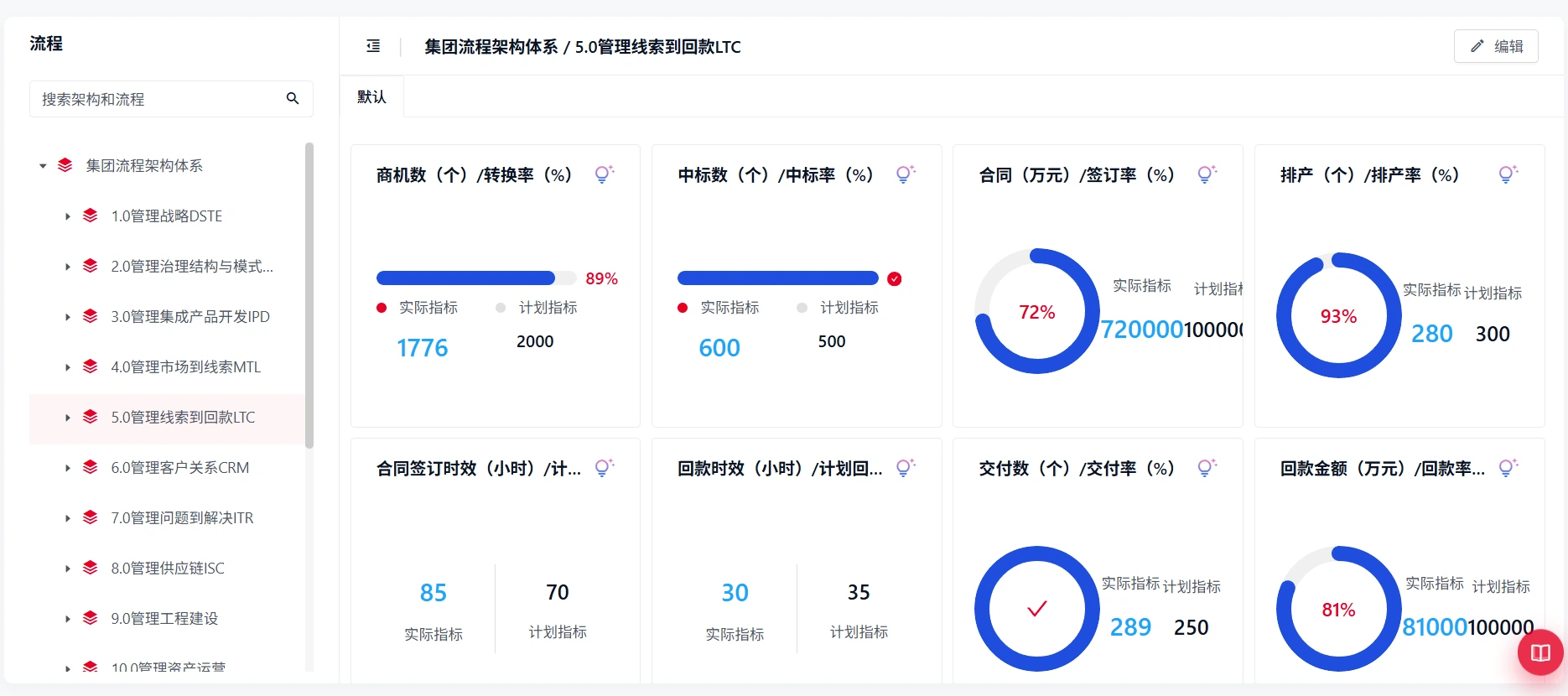
Build dashboards for cycle time, rework, first-pass yield and
service-level targets. Combine process indicators with cost,
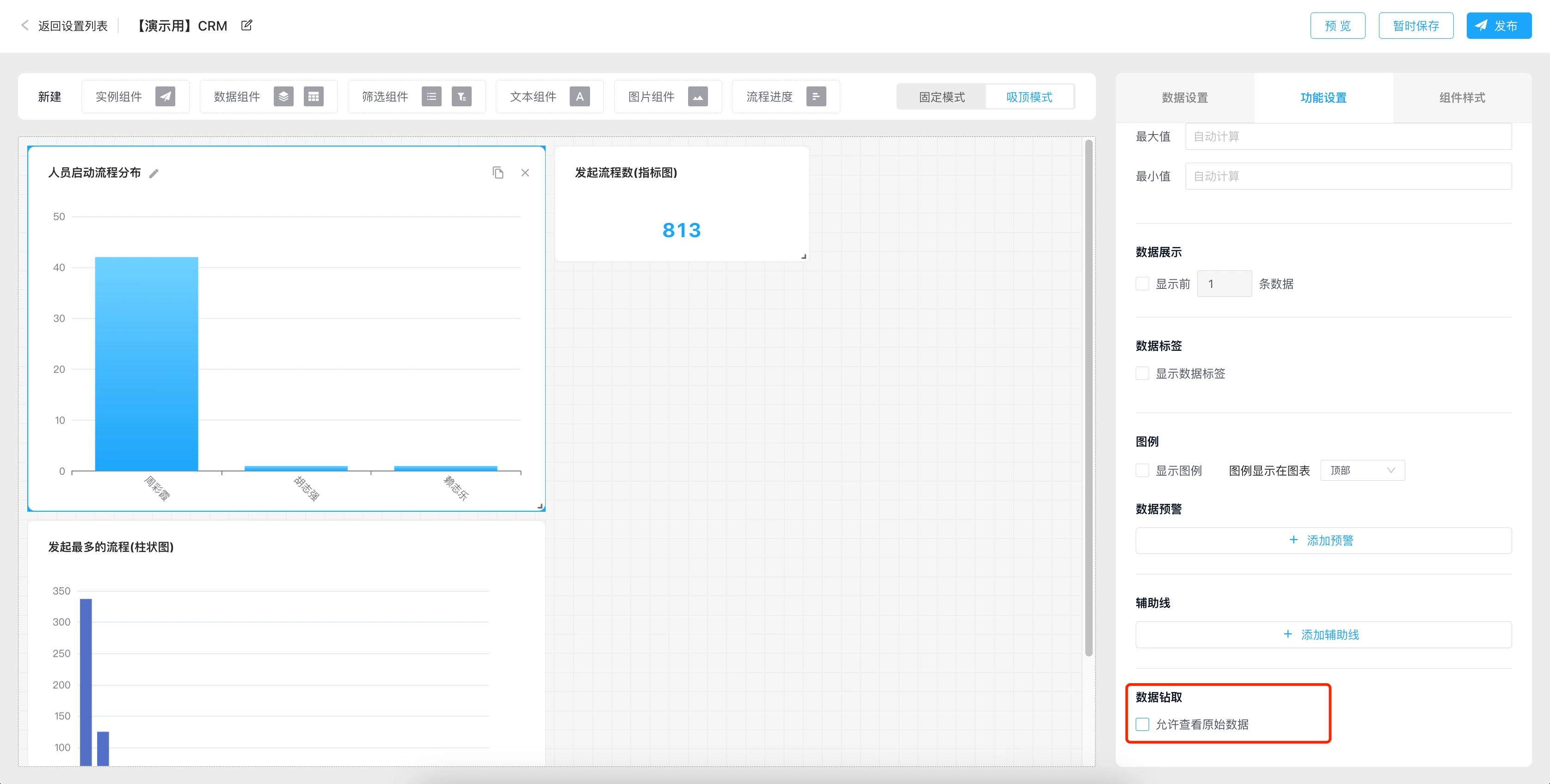
quality and other business measures. Drill down from summary
charts to paths, cases and original records so teams can verify
the evidence behind a finding.
06
Monitor changes and notify owners
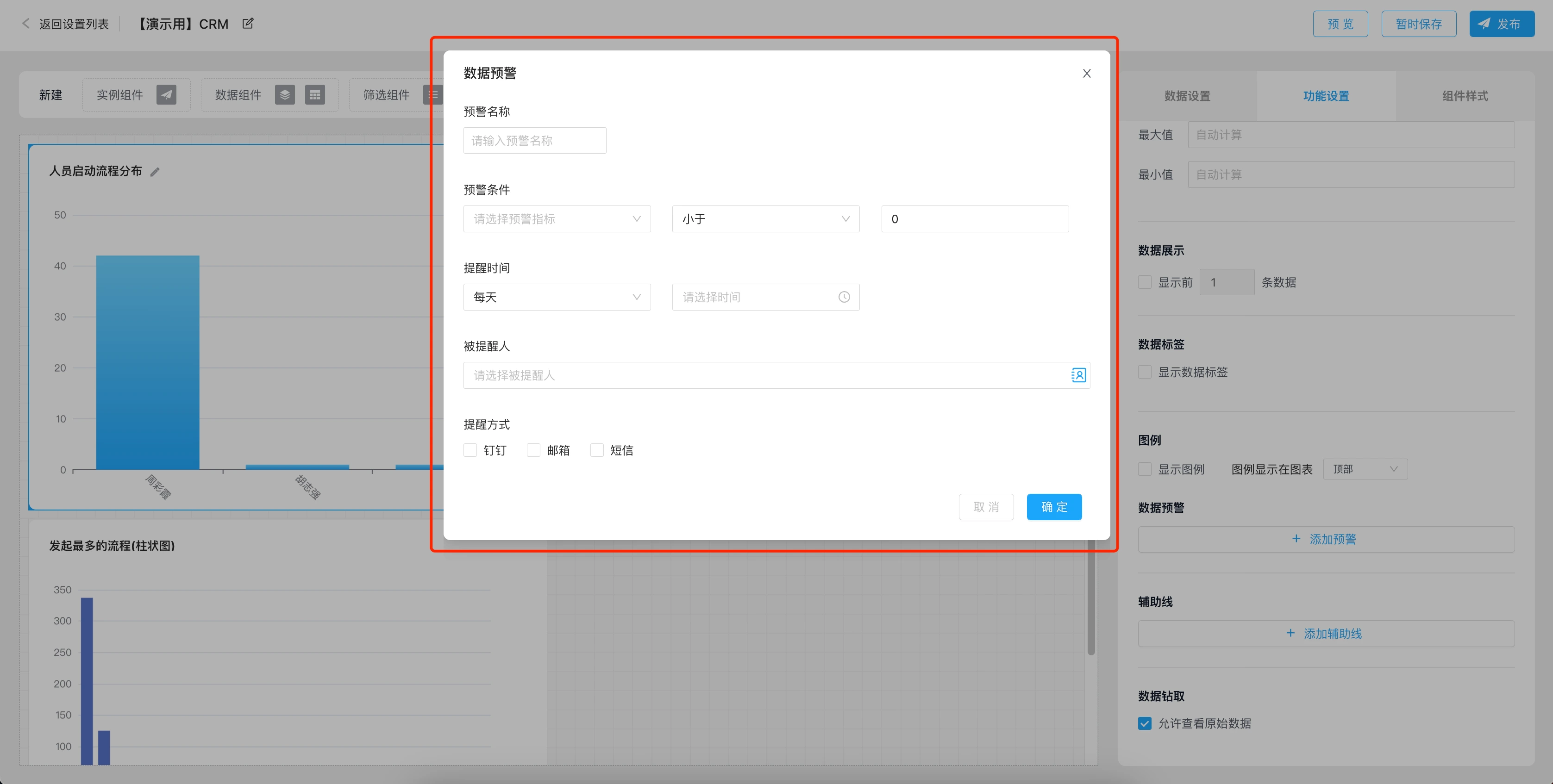
Set thresholds and monitoring intervals for indicators such as
backlog, cycle time and compliance. Notify responsible owners when
conditions are met and locate the relevant processes and cases.
Use continuously updated data to track whether improvement actions
are working.
07
Test improvement scenarios
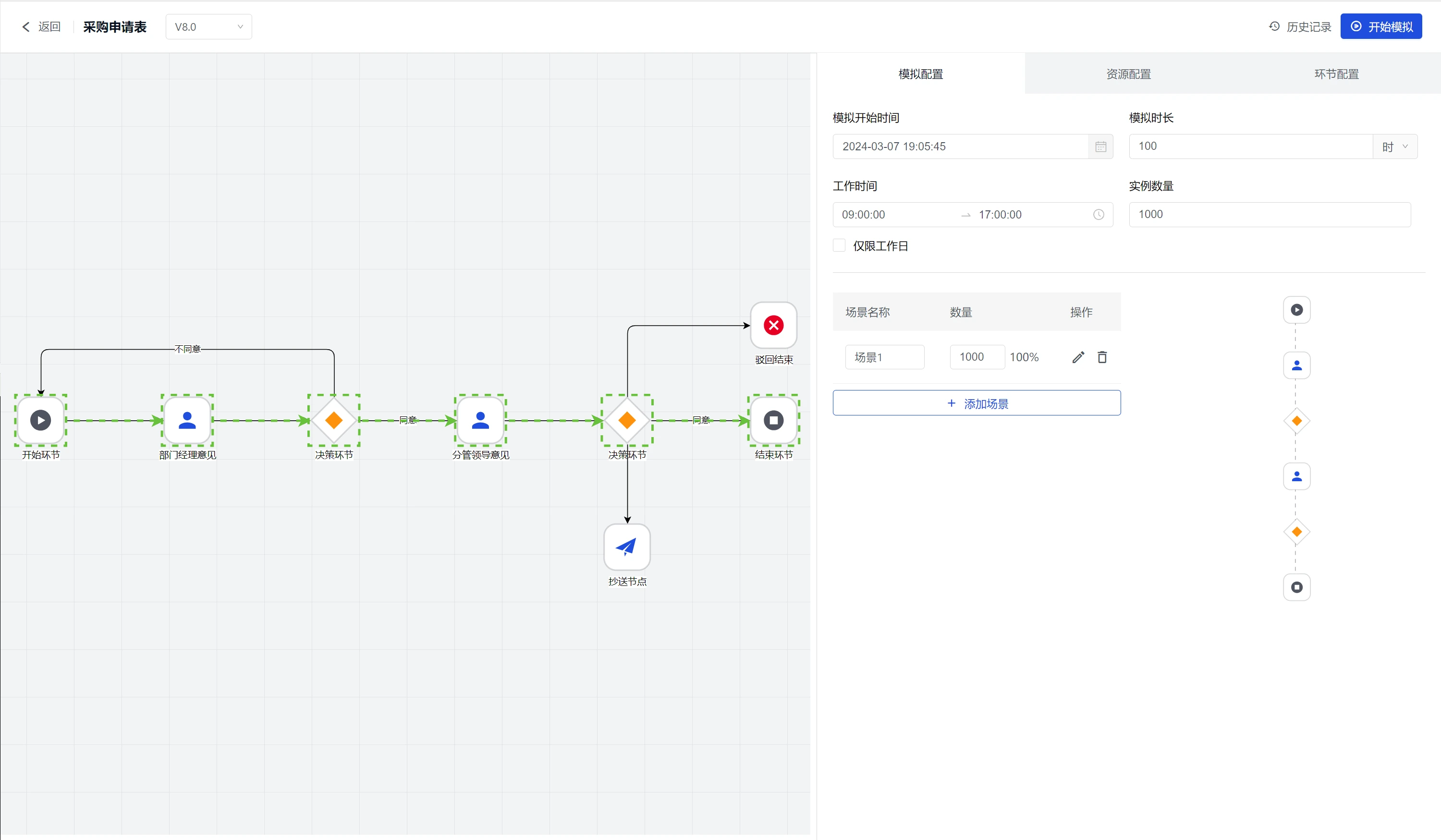
Simulate changes to resources, activity capacity, routing and
arrival volumes using process models and operating parameters.
Compare the resulting cycle times and bottlenecks before rollout.
Use simulation reports to evaluate options, then validate the
selected changes against actual execution data.
08
Build a repeatable improvement cycle
Start with a valuable process whose event data is available. Agree
goals and definitions with business, process and IT teams,
validate models together, and publish dashboards with an action
list. Feed findings into EBPA design and BPA execution, then
review the results through ongoing monitoring.